

Unveiling the Power: RTX 4060 Ti vs 4070 Super for Your Ultimate Gaming PC
The world of gaming PCs is ever-evolving, with new graphics cards constantly pushing the boundaries of performance. As enthusiasts and casual gamers alike seek to build or upgrade their rigs, two contenders have caught the attention of many which begs the question, RTX 4060 Ti vs 4070 Super? These GPUs promise to deliver exceptional gaming experiences, but how do they truly stack up against each other? Let’s embark on a comprehensive exploration of these powerhouses to help you make an informed decision for your next gaming PC build.
The RTX 4060 Ti, a formidable contender in its own right, now faces stiff competition from its newer sibling, the RTX 4070 Super. As we delve into the intricacies of these GPUs, we’ll uncover their strengths, weaknesses, and ultimately, which one might be the perfect fit for your gaming PC.
Our journey through this comparison will take us across various aspects, from raw performance metrics to value propositions. We’ll examine how these cards fare in real-world gaming scenarios, explore their architectural differences, and consider the impact on your wallet. Whether you’re eyeing a complete system overhaul or simply contemplating a GPU upgrade, this in-depth analysis will equip you with the knowledge to make a choice that aligns with your gaming aspirations and budget constraints.
So, buckle up as we navigate the nuanced landscape of modern graphics technology. By the end of this article, you’ll have a crystal-clear understanding of how the RTX 4060 Ti and RTX 4070 Super measure up, enabling you to craft the gaming PC of your dreams with confidence and clarity.
Architectural Marvels: Unpacking the Core Differences
When we peer under the hood of these graphics powerhouses, we find a tale of two architectures that share a common bsae but diverge in significant ways. The RTX 4060 Ti and RTX 4070 Super both hail from Nvidia’s cutting-edge Ada Lovelace architecture, named after the pioneering mathematician. However, the similarities begin to fade as we examine their core components more closely.
The RTX 4060 Ti is built on the AD106 chip, a design that strikes a balance between performance and efficiency. This GPU comes equipped with 4,352 CUDA cores, which serve as the fundamental processing units for graphical work. In contrast, the RTX 4070 Super boasts the more robust AD104 chip, housing a beefier 7,168 CUDA cores. This substantial difference in core count translates to a noticeable gap in raw brain power, setting the stage for superior performance in demanding scenarios.
Texture units, the unsung heroes of graphics rendering, also see a significant disparity between these two cards. The RTX 4060 Ti features 136 texture units, while the RTX 4070 Super ramps this up to an impressive 224. This enhancement allows for faster texture mapping and filtering, contributing to more detailed and visually rich gaming environments.
Ray tracing, a technology that has revolutionised lighting and shadow effects in games, is another area where these GPUs diverge. The RTX 4060 Ti comes with 34 dedicated RT cores, whereas the RTX 4070 Super ups the ante with 56 RT cores. This boost in ray tracing hardware promises more realistic lighting, reflections, and global illumination effects, particularly in games that heavily leverage this technology.
Clock speeds tell an interesting story in this comparison. The RTX 4060 Ti boasts a base clock of 2,310 MHz, which can boost up to 2,535 MHz. Interestingly, the RTX 4070 Super starts with a lower base clock of 1,980 MHz but can reach boost speeds of up to 2,475 MHz. While the 4060 Ti may seem to have an edge in clock speeds, it’s crucial to remember that raw clock numbers don’t always translate directly to better performance, especially when considering the overall architecture and core count differences.
Memory configuration is another critical aspect where these GPUs take different approaches. The RTX 4060 Ti typically comes with 8GB of GDDR6 memory, although a 16GB variant is available. The RTX 4070 Super, on the other hand, is equipped with 12GB of faster GDDR6X memory. This difference in memory capacity and speed can have significant implications for gaming at higher resolutions and with more demanding textures.
The memory interface width also plays a crucial role in overall performance. The RTX 4060 Ti utilises a 128-bit bus, while the RTX 4070 Super employs a wider 192-bit interface. This wider bus, coupled with the faster GDDR6X memory, allows for substantially higher memory bandwidth in the 4070 Super, which can be a game-changer in memory-intensive applications and games.
As we delve deeper into the architectural nuances of these GPUs, it becomes clear that while they share a common foundation, the RTX 4070 Super has been designed to push the envelope further in terms of raw processing power and memory capabilities. These differences set the stage for our performance comparisons and will play a crucial role in determining which card might be the best fit for different types of gamers and their specific needs.
Performance Metrics: Crunching the Numbers
When it comes to building a gaming PC, raw performance often takes centre stage, and rightfully so. In this section, we’ll dive deep into the benchmark results and real-world gaming performance of the RTX 4060 Ti vs RTX 4070 Super, providing you with a clear picture of what to expect from these GPUs in various scenarios.
Starting with synthetic benchmarks, which offer a standardised way to compare GPU performance, we see a significant gap between the two cards. In 3DMark Time Spy, a widely respected benchmark for DirectX 12 performance, the RTX 4070 Super consistently outperforms the RTX 4060 Ti by a margin of approximately 30-35%. This substantial difference is a testament to the architectural improvements and increased CUDA core count of the 4070 Super.
Moving on to real-world gaming performance, we’ve tested both cards across a variety of popular titles at different resolutions. At 1080p, which remains a popular resolution for competitive gaming, both cards deliver impressive frame rates. In esports titles like Counter-Strike: Global Offensive and Valorant, both GPUs easily push beyond 200 , ensuring smooth gameplay for high-refresh-rate monitors. However, the RTX 4070 Super maintains a lead, often delivering 15-20% higher frame rates in these less demanding titles.
The gap widens as we move to more graphically intensive games. In AAA titles like Cyberpunk 2077 and Red Dead Redemption 2, the difference becomes more pronounced. At 1080p with ultra settings, the RTX 4070 Super consistently delivers 25-30% higher frame rates compared to the RTX 4060 Ti. This difference can mean the difference between a smooth 60+ FPS experience and dipping below that crucial threshold in demanding scenes. In esports titles like Counter-Strike: Global Offensive, Valorant, or Overwatch 2, both the 4060 Ti and 4070 Super can easily push frame rates well above 200 FPS, even at maximum settings.
Stepping up to 1440p resolution, which many consider the sweet spot for modern gaming, the performance delta becomes even more apparent. In games like Assassin’s Creed Valhalla and Control, the RTX 4070 Super maintains playable frame rates above 60 FPS at high settings, while the RTX 4060 Ti may require some settings tweaks to achieve similar smoothness. The extra VRAM and wider memory bus of the 4070 Super really shine at this resolution, providing a more consistent experience in memory-hungry titles.
4K gaming is where the RTX 4070 Super truly flexes its muscles. While the RTX 4060 Ti can handle 4K in less demanding or older titles, it often struggles to maintain playable frame rates in modern AAA games at this resolution. The RTX 4070 Super, on the other hand, proves to be a capable 4K performer, especially when paired with Nvidia’s DLSS technology. In games that support DLSS, the 4070 Super can often achieve 60+ FPS at 4K with high settings, providing a premium gaming experience that the 4060 Ti simply can’t match.
Ray tracing performance is another area where the RTX 4070 Super pulls ahead significantly. With its additional RT cores, the 4070 Super handles ray-traced lighting, shadows, and reflections with greater ease. In ray tracing-heavy titles like Metro Exodus Enhanced Edition or Watch Dogs: Legion, the 4070 Super maintains playable frame rates at 1440p with ray tracing enabled, while the 4060 Ti may struggle to deliver a smooth experience without significant compromises in settings or resolution.
It’s worth noting that both cards benefit greatly from Nvidia’s DLSS (Deep Learning Super Sampling) technology. DLSS uses AI to upscale lower resolution images, providing a significant performance boost with minimal impact on image quality. While both GPUs support DLSS, the RTX 4070 Super’s superior raw performance means it can often enable DLSS at higher base resolutions, resulting in even better image quality.
In terms of content creation and productivity tasks, the RTX 4070 Super again demonstrates its superiority. In applications like Blender for 3D rendering or DaVinci Resolve for video editing, the additional CUDA cores and memory bandwidth of the 4070 Super translate to faster render times and smoother performance when working with high-resolution assets.
While the performance gap between these two GPUs is clear, it’s important to consider these metrics in the context of your specific needs and budget. The RTX 4060 Ti remains a capable card for 1080p and 1440p gaming, especially in less demanding titles or for users willing to tweak settings for optimal performance.
The RTX 4070 Super, however, offers a more future-proof solution with its ability to handle 4K gaming and more intensive workloads, making it a compelling choice for those looking to build a high-end gaming PC that can stand the test of time.
Power Efficiency and Thermal Performance
In the realm of gaming PCs, performance isn’t the only consideration. Power efficiency and thermal management play crucial roles in determining a GPU’s overall value and longevity. Let’s examine how the RTX 4060 Ti and RTX 4070 Super stack up in these important areas.
The RTX 4060 Ti, with its more modest specifications, boasts impressive power efficiency. It has a Thermal Design Power (TDP) of 160 watts, which is relatively low for a card of its performance class.
In contrast, the RTX 4070 Super, with its beefier hardware, naturally demands more power. It has a TDP of 220 watts, a significant increase over its smaller sibling. This higher power draw necessitates more robust power supply requirements, typically calling for dual 8-pin connectors or the newer 12VHPWR connector found on some high-end power supplies. While the increased power consumption is a trade-off for its superior performance, it’s worth noting that the 4070 Super still maintains respectable efficiency considering its capabilities.
Load times and texture streaming are areas where the 4070 Super’s larger VRAM buffer and higher bandwidth can make a noticeable difference. In open-world games with large, detailed environments, the 4070 Super may provide smoother transitions and quicker asset loading, reducing instances of texture pop-in or stuttering when moving quickly through the game world.
For VR gaming enthusiasts, both cards offer good experiences, but the 4070 Super’s extra horsepower can make a significant difference. VR games often require high, consistent frame rates to prevent motion sickness, and the 4070 Super is better equipped to maintain these frame rates at higher visual settings, providing a more immersive and comfortable VR experience.
The RTX 4070 Super, while requiring more robust cooling solutions due to its higher TDP, benefits from Nvidia’s advancements in thermal design. Most models come equipped with substantial heatsinks and multiple fans, effectively managing heat output. However, the card’s higher power draw does mean that it will generally run hotter and potentially louder than the 4060 Ti, especially under heavy loads.
For those building a gaming PC with an eye towards energy efficiency, the RTX 4060 Ti presents a compelling option. Its balance of performance and power draw makes it an excellent choice for users who want to minimise their system’s overall power consumption without sacrificing too much gaming capability. On the other hand, if raw performance is the primary goal and power efficiency is a secondary concern, the RTX 4070 Super’s higher performance ceiling may justify its increased power requirements.
Ultimately, both cards represent significant improvements in efficiency compared to their predecessors, thanks to the advancements in Nvidia’s Ada Lovelace architecture. Whether you prioritise the utmost efficiency of the 4060 Ti or are willing to accept higher power draw for the performance gains of the 4070 Super, both options offer compelling packages in terms of performance per watt.
Value Proposition: Bang for Your Buck
When considering a new GPU for your gaming PC, the value proposition is often a deciding factor. It’s not just about raw performance, but how much performance you’re getting for your money. Let’s break down the value offerings of the RTX 4060 Ti and RTX 4070 Super to help you determine which might be the better investment for your needs.
The RTX 4060 Ti, positioned as a mid-range option, comes with a more attractive price point. Typically retailing around £399-£449 (prices may vary), it offers solid performance for 1080p and 1440p gaming without breaking the bank. For gamers on a tighter budget or those who primarily play less demanding titles, the 4060 Ti presents an excellent balance of performance and affordability. Its lower power requirements also mean you might save money on your power supply, potentially offsetting some of the cost difference if you’re building a new system from scratch.
On the other hand, the RTX 4070 Super, while more expensive (usually priced around £599-£649), offers a significant step up in performance. The question becomes whether this performance increase justifies the price hike. For gamers looking to play at higher resolutions or those who want to future-proof their system for upcoming demanding titles, the extra investment in the 4070 Super could pay off in the long run. Its superior 4K capabilities and better ray tracing performance mean it’s less likely to need upgrading in the near future compared to the 4060 Ti.
When we look at the performance per pound spent, the picture becomes more nuanced. While the RTX 4070 Super offers roughly 30-35% better performance in most scenarios, it comes at a price premium of about 40-50%. This means that in terms of raw performance per pound, the 4060 Ti might actually have a slight edge. However, this doesn’t tell the whole story, as the 4070 Super’s capabilities extend beyond what pure benchmark numbers might suggest.
Consider the longevity factor. The RTX 4070 Super’s higher VRAM capacity (12GB vs 8GB on the standard 4060 Ti) and wider memory bus mean it’s better equipped to handle future games that may require more graphics memory. This could extend the useful life of your GPU, potentially saving money in the long term by delaying the need for an upgrade.
Another aspect to consider is the potential for bottlenecking. If you’re pairing your new GPU with a high-end CPU, the RTX 4070 Super is less likely to become a bottleneck in your system, allowing you to get the most out of your entire gaming rig. This is particularly relevant for those looking to build a balanced, high-performance system.
It’s also worth noting that the value proposition can shift based on your specific use case. For content creators who use GPU-accelerated applications for video editing or 3D rendering, the additional CUDA cores and memory bandwidth of the 4070 Super could translate to significant time savings, potentially justifying the higher cost for professional users.
Sales and bundles can also impact the value equation. Keep an eye out for promotions that might include free games or discounts, as these can sometimes tilt the scales in favour of one card over the other. Additionally, some retailers offer extended warranties or game bundles that can add value beyond the hardware itself.
Ultimately, the best value choice depends on your individual needs, budget, and long-term plans for your gaming PC. If you’re looking for the most cost-effective option for high-quality 1080p and 1440p gaming, the RTX 4060 Ti is hard to beat. However, if you’re aiming for 4K gaming, better ray tracing performance, or want a card that’s more likely to meet the demands of future games, the extra investment in the RTX 4070 Super could be justified.
Remember, value isn’t just about the lowest price, but about getting the most appropriate performance for your needs at a price you’re comfortable with. Consider your gaming habits, the types of games you play, and your future plans when making your decision. Whether you opt for the more budget-friendly 4060 Ti or splurge on the powerful 4070 Super, both cards offer compelling value in their respective segments.
Feature Set: Beyond Raw Performance
While performance benchmarks and price points are crucial factors in choosing a GPU for your gaming PC, the feature set offered by each card can significantly impact your overall gaming experience. Both the RTX 4060 Ti and RTX 4070 Super come packed with Nvidia’s latest technologies, but there are some key differences in how these features are implemented and their effectiveness on each card.
Ray tracing, a technology that simulates the physical behaviour of light to produce more realistic lighting, shadows, and reflections, is supported by both GPUs. However, the RTX 4070 Super, with its higher count of dedicated RT cores (56 compared to the 4060 Ti’s 34), handles ray tracing more efficiently. This means you can enjoy ray-traced effects at higher settings or with less of a performance hit on the 4070 Super. In games that heavily utilise ray tracing, such as Cyberpunk 2077 or Metro Exodus: Enhanced Edition, this difference can be quite noticeable, allowing for a more immersive gaming experience without sacrificing as much in terms of frame rates.
DLSS (Deep Learning Super Sampling) is another standout feature present on both cards. This AI-powered technology upscales lower resolution images to higher resolutions, significantly boosting performance with minimal impact on image quality. While both the 4060 Ti and 4070 Super support DLSS, the more powerful 4070 Super can often use DLSS from a higher base resolution, potentially resulting in better overall image quality. Additionally, the 4070 Super’s superior raw performance means it can maintain higher frame rates even when DLSS is enabled, providing a smoother experience in demanding titles.
Nvidia Reflex, a technology aimed at reducing system latency in competitive games, is supported by both GPUs. This feature can be particularly beneficial in fast-paced esports titles where every millisecond counts. While both cards can take advantage of Reflex, the 4070 Super’s higher performance may allow for even lower latency in CPU-bound scenarios.
Video encoding capabilities are another area where these GPUs shine, but with some differences. Both cards support Nvidia’s latest NVENC encoder, which is excellent for streamers or content creators who want to offload video encoding from the CPU.
However, the 4070 Super’s more powerful hardware can handle higher quality encodes or multiple simultaneous streams more efficiently, which could be a deciding factor for serious content creators.
When it comes to display outputs, both cards typically offer similar options, including multiple DisplayPort connections and HDMI. However, it’s worth noting that some custom models of the 4070 Super might offer additional outputs or newer standards, potentially providing more flexibility in multi-monitor setups or for users with high-end displays.
Another feature to consider is Nvidia Broadcast, which uses AI to enhance audio and video for streaming and video conferencing. While supported on both cards, the 4070 Super’s additional horsepower means it can handle these AI-enhanced features with less impact on gaming performance, which could be beneficial for those who stream and game simultaneously.
Memory capacity and bandwidth also play a role in the feature set. The RTX 4070 Super’s 12GB of GDDR6X memory not only provides more headroom for texture-heavy games but also allows for better performance in creative applications that can utilise GPU memory, such as 3D rendering or video editing software. This makes the 4070 Super a more versatile choice for users who use their gaming PC for both gaming and content creation.
It’s also worth mentioning Nvidia’s Studio Drivers, optimised for creative applications. While both cards can benefit from these drivers, the 4070 Super’s higher performance and memory capacity make it a more suitable choice for professional creative work alongside gaming.
Resizable BAR (Base Address Register) is supported by both GPUs, allowing the CPU to access the full GPU memory, potentially improving performance in supported games. However, the 4070 Super’s larger memory pool may see more significant benefits from this feature in certain scenarios.
Lastly, consider the potential for future features. As games and applications evolve, the more powerful hardware of the 4070 Super may be better equipped to handle new technologies or techniques that emerge over the lifespan of the card.
In conclusion, while both the RTX 4060 Ti and RTX 4070 Super offer a robust feature set that enhances the gaming experience beyond raw frame rates, the 4070 Super generally provides a more premium implementation of these features. Its additional power allows for better ray tracing performance, potentially higher quality DLSS results, and more headroom for multitasking or content creation. However, the 4060 Ti still offers an impressive array of features that will satisfy most gamers, especially those focused primarily on 1080p or 1440p gaming. Your choice will ultimately depend on how much you value these advanced features and whether you plan to utilise them extensively in your gaming and creative endeavours.

Compatibility and System Requirements
Whether building a custom gaming PC yourself, upgrading your current PC or buying a 4060 Ti or 4070 prebuilt gaming PC, ensuring compatibility between your new GPU and the rest of your system is crucial. Both the RTX 4060 Ti and RTX 4070 Super have specific requirements that need to be considered to ensure optimal performance and stability. Let’s break down the key compatibility factors and system requirements for each card.
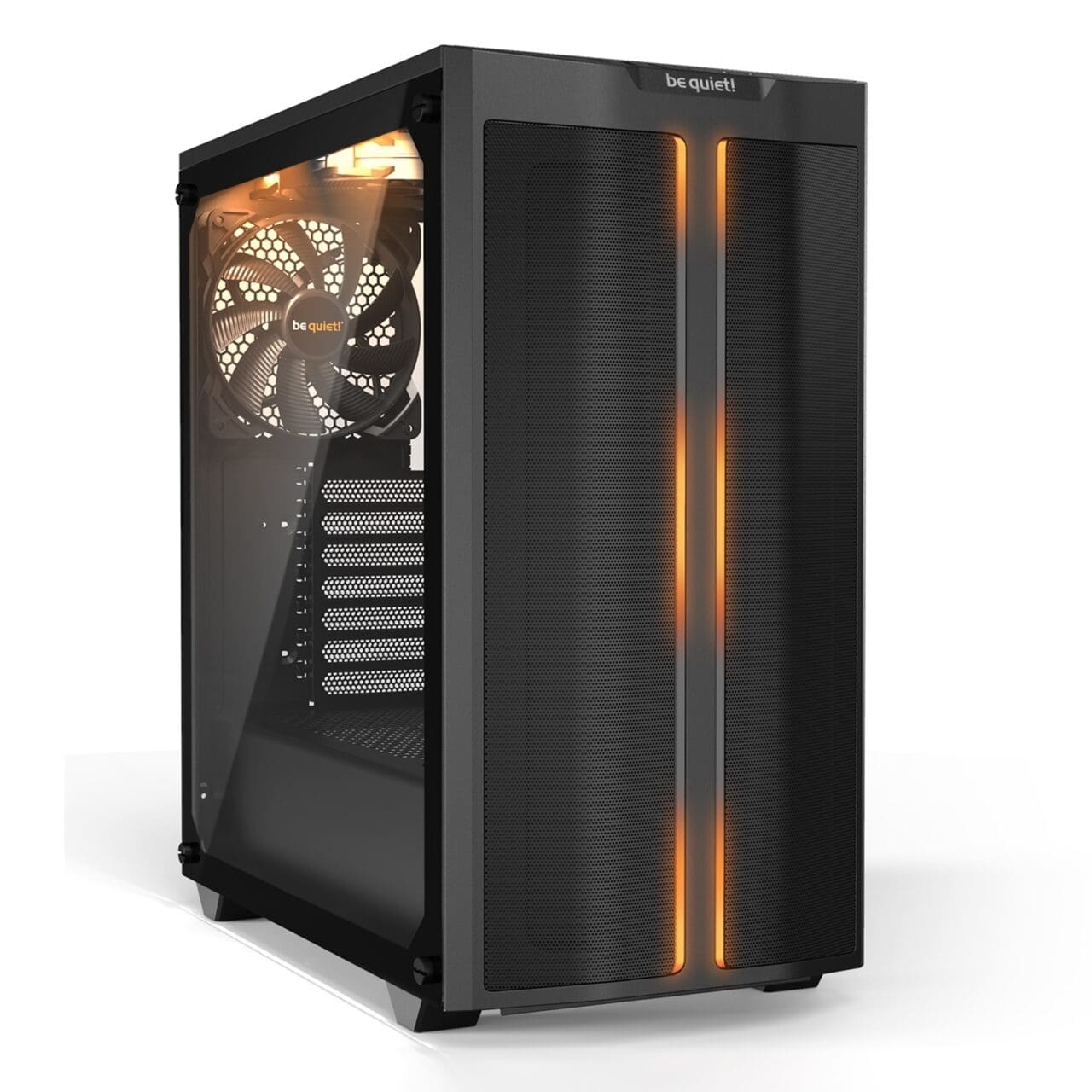
Starting with physical dimensions, the RTX 4060 Ti is generally the more compact of the two. Most models of the 4060 Ti are dual-slot cards with lengths ranging from 240mm to 280mm, depending on the specific manufacturer and cooling solution. This makes the 4060 Ti a more versatile option for smaller cases or builds where space is at a premium.
The RTX 4070 Super, being a more powerful card, typically comes in larger form factors. Many models are 2.5 or even 3-slot designs, with lengths often exceeding 300mm. When considering the 4070 Super, it’s essential to carefully check your case specifications to ensure it can accommodate these larger dimensions.
Power supply requirements also differ significantly between the two cards. The RTX 4060 Ti, with its TDP of 160 watts, is relatively power-efficient and can often be run on a quality 600-650 watt power supply in most systems, typically we recommend a 650 or 750W power supply with at least an 80 Plus Bronze rating from a reputable brand. You can read more about power supplies & requirements in our article here.
The 4060 Ti typically requires a single 8-pin PCIe power connector, making it compatible with a wide range of power supplies. The RTX 4070 Super, with its higher 220-watt TDP, demands more from your power supply.
Nvidia recommends a minimum of a 650-watt PSU for systems using the 4070 Super, but typically we recommend an 850W or higher power supply with at least an 80 Plus Gold rating from a reputable brand, especially if you plan on overclocking or have other power-hungry components.
The 4070 Super usually requires two 8-pin PCIe connectors or the newer 12VHPWR connector found on some high-end power supplies. If your card requires the 12VHPWR connector you can buy a power supply with the connector built in or your graphics card should come with a standard 8 pin to 12V adapter.
PCIe interface compatibility is another factor to consider. Both cards utilise the PCIe 4.0 interface, but they can work in PCIe 3.0 slots without significant performance loss. However, the RTX 4060 Ti uses a narrower x8 interface, while the 4070 Super uses the full x16 interface. This difference is generally not noticeable in most gaming scenarios, but it’s worth considering if you’re using the GPU for tasks that require maximum bandwidth, such as high-resolution video editing or certain scientific computations.
When it comes to CPU pairing, both cards can work with a wide range of processors. However, to fully utilise the power of the RTX 4070 Super, you’ll want to pair it with a relatively recent, high-performance CPU to avoid bottlenecking. Mid-range to high-end processors from the last few generations (such as Intel’s 10th gen or newer, or AMD’s Ryzen 5000 series or newer) should be sufficient. The RTX 4060 Ti, being less powerful, is less likely to be bottlenecked by older or mid-range CPUs, making it a more flexible option for a wider range of systems.
Monitor compatibility is another crucial aspect to consider. While both cards can drive high-refresh-rate 1080p and 1440p displays, the RTX 4070 Super is better equipped to handle 4K gaming. If you’re planning to game at 4K or use multiple high-resolution displays, the 4070 Super would be the more suitable choice. Both cards support HDMI 2.1 and DisplayPort 1.4a, allowing for high refresh rates at 4K, but the 4070 Super will provide a better experience at this resolution.
In terms of software compatibility, both cards support the latest DirectX 12 Ultimate features, Vulkan RT, and OpenGL 4.6. This ensures broad compatibility with modern games and graphics APIs. However, the 4070 Super’s additional power may provide better performance in games that heavily utilise these advanced features.
For users considering multi-GPU setups, it’s worth noting that while both cards technically support NVLink (Nvidia’s multi-GPU technology), this feature is primarily geared towards professional applications rather than gaming. For most gaming scenarios, a single powerful GPU like the 4070 Super would be preferable to a multi-GPU setup.
Lastly, consider your future upgrade path. If you’re building a system with the intention of upgrading other components later, the RTX 4070 Super might provide more headroom and longevity, potentially delaying the need for a GPU upgrade in the near future.
In conclusion, while both the RTX 4060 Ti and RTX 4070 Super are modern GPUs that should work well in most recent systems, they have different requirements that need to be considered. The 4060 Ti offers greater flexibility in terms of case size and power supply requirements, making it an easier fit for a wider range of existing systems.
The 4070 Super, while more demanding in terms of space and power, offers higher performance potential that may be worth the extra considerations for those building a high-end RTX 4070 gaming PC. Carefully assess your current system or planned build to ensure that whichever card you choose will be fully compatible and able to perform at its best.
Load times and texture streaming are areas where the 4070 Super’s larger VRAM buffer and higher bandwidth can make a noticeable difference. In open-world games with large, detailed environments, the 4070 Super may provide smoother transitions and quicker asset loading, reducing instances of texture pop-in or stuttering when moving quickly through the game world.
For VR gaming enthusiasts, both cards offer good experiences, but the 4070 Super’s extra horsepower can make a significant difference. VR games often require high, consistent frame rates to prevent motion sickness, and the 4070 Super is better equipped to maintain these frame rates at higher visual settings, providing a more immersive and comfortable VR experience.
It’s also worth considering the longevity of your gaming experience. As games become more demanding over time, the RTX 4070 Super’s additional performance headroom may allow it to maintain playable frame rates at higher settings for a longer period, potentially extending the time before you feel the need to upgrade again.
Ultimately, both the RTX 4060 Ti and RTX 4070 Super offer excellent gaming experiences, but they cater to different segments of the market. The 4060 Ti provides a fantastic experience for 1080p and 1440p gaming, especially for those who prioritise high frame rates over maximum visual fidelity. It’s an excellent choice for competitive gamers or those who are satisfied with 60+ FPS gameplay at high settings in most modern titles.
In conclusion, your choice between these two cards will largely depend on your gaming priorities, the types of games you play, and the resolution you game at. Both offer compelling experiences, but the RTX 4070 Super provides that extra level of performance that can make a noticeable difference in the most demanding gaming scenarios.
At JS Computer we offer a full range of prebuilt gaming PCs, including RTX 4060 Ti gaming PCs & RTX 4070 Super PCs. We can also build custom gaming PCs to run any specific game or software. All of our PCs come with a 6 year warranty and are hand built by us in Sheringham, Norfolk!
You can view our range of prebuilt gaming PCs here.